An area in which an explosive gas atmosphere is not likely to occur in normal operation and, if it occurs, will only exist for a short time.
A place in which an explosive atmosphere in the form of a cloud of combustible dust in air is not likely to occur in normal operation but, if it does occur, will persist for a short period only.
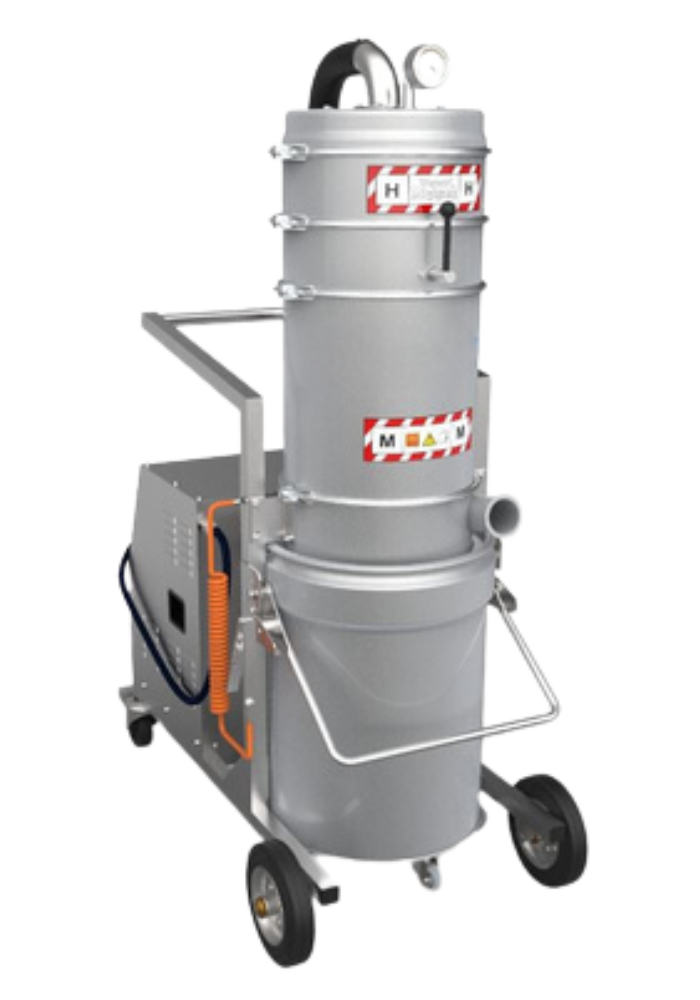
The KEVA range of Class H vacuum cleaners has been purposely designed, built, tested and approved as suitable to pick up potentially explosive and conductive dust and debris in a Dust Zone 22. KEVA cleaners are also suitable for picking up dust and debris that is hazardous to health.
All models are built using an electronically commutated brushless motor featuring soft start and thermal protection. Each model in the range is equipped with three stages of filtration on the negative pressure (suction) side of the motor.
In most cases, no. Standard industrial or commercial vacuum cleaners are not designed for hazardous dust environments and may introduce ignition risks through static electricity, electrical components or hot surfaces. Using unsuitable equipment can increase the likelihood of a fire or dust explosion where combustible materials are present.
If your process generates combustible dust, it's important to assess whether an ATEX-certified vacuum is required. Kerstar can help you select the appropriate vacuum solution for your application and workplace environment.
The choice between an air-powered and electric industrial vacuum depends on the working environment and available utilities. Air-powered vacuums are often preferred in hazardous areas where compressed air is available, as they do not require electrical power and can be suitable for certain ATEX applications. Electric vacuums are commonly used where mains power is available and offer a practical solution for many industrial cleaning tasks.
Kerstar supplies both electric and air-powered industrial vacuum cleaners, including ATEX-certified options for hazardous environments.
The main difference between single-phase and three-phase industrial vacuums is the type of electrical supply and the level of power they can provide. Single-phase vacuums are commonly used for general industrial cleaning applications where portability and flexibility are important. Three-phase vacuums are typically designed for more demanding environments requiring higher airflow, greater suction performance or longer operating periods.
Kerstar offers industrial vacuum cleaners in a range of power configurations to suit different manufacturing requirements, from everyday cleaning to heavy-duty continuous applications.
Maintaining an ATEX industrial vacuum involves regular inspections, routine cleaning, filter checks and servicing in accordance with the manufacturer's recommendations. Components such as hoses, seals, earth continuity and collection containers should also be checked to ensure the vacuum continues to operate safely in hazardous environments.
Because ATEX-certified equipment is designed for use in potentially explosive atmospheres, maintenance should always be carried out correctly to preserve its safety features. Kerstar provides servicing advice and support to help customers maintain their ATEX vacuum cleaners.